

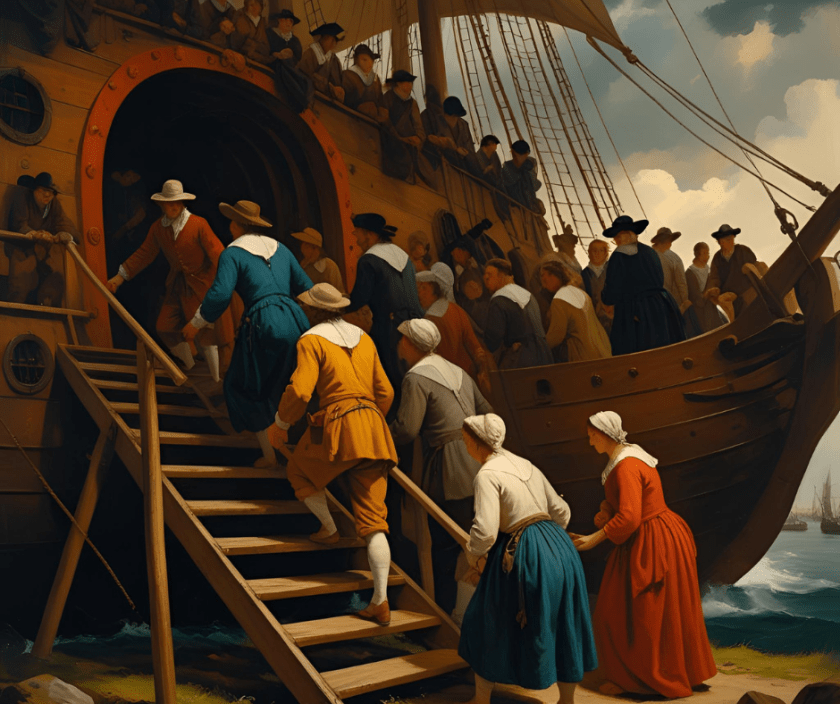
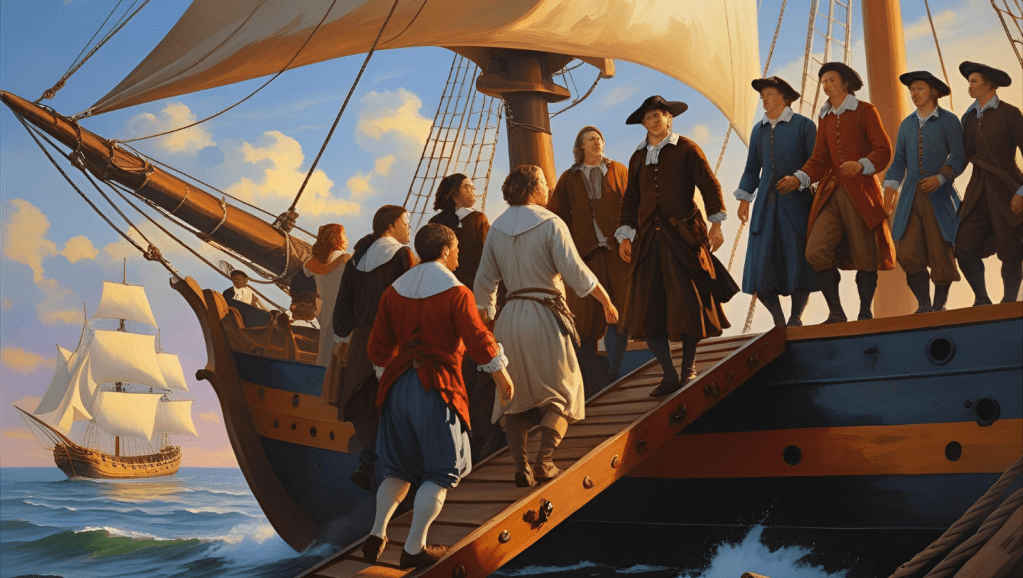
For genealogists, 17th-century ship records are windows into the early age of transatlantic migration. Whether documenting Puritan voyages to New England, indentured servants bound for Virginia, or settlers heading to the Caribbean, these records capture the earliest waves of European migration to the Americas. While not always as detailed or standardized as later manifests, they are vital resources for understanding family histories of the colonial period.
What Were 17th-Century Ship Manifests?
Unlike the detailed passenger lists of the 19th and 20th centuries, 17th-century manifests were practical administrative documents. Their purpose was to:
- Account for passengers (for safety and legal reasons)
- Record indentures and contracts (especially for servants and apprentices)
- Track taxable goods and customs
- Provide proof of compliance with immigration regulations (like England’s 1635 requirement for licensed departures)
The result is a patchwork of surviving lists—some highly detailed, others only fragmentary.
Types of Information Found
Depending on the voyage and colony, ship manifests might include:
- Names of passengers (sometimes only heads of households or servants)
- Ages (useful for approximating birth years)
- Occupations or trades
- Status (free settler, servant, convict, or military personnel)
- Port of departure and arrival
- Destination colony (Virginia, Massachusetts Bay, Barbados, etc.)
- Terms of indenture (length of service, sponsor’s name)
Examples of Surviving 17th-Century Manifests
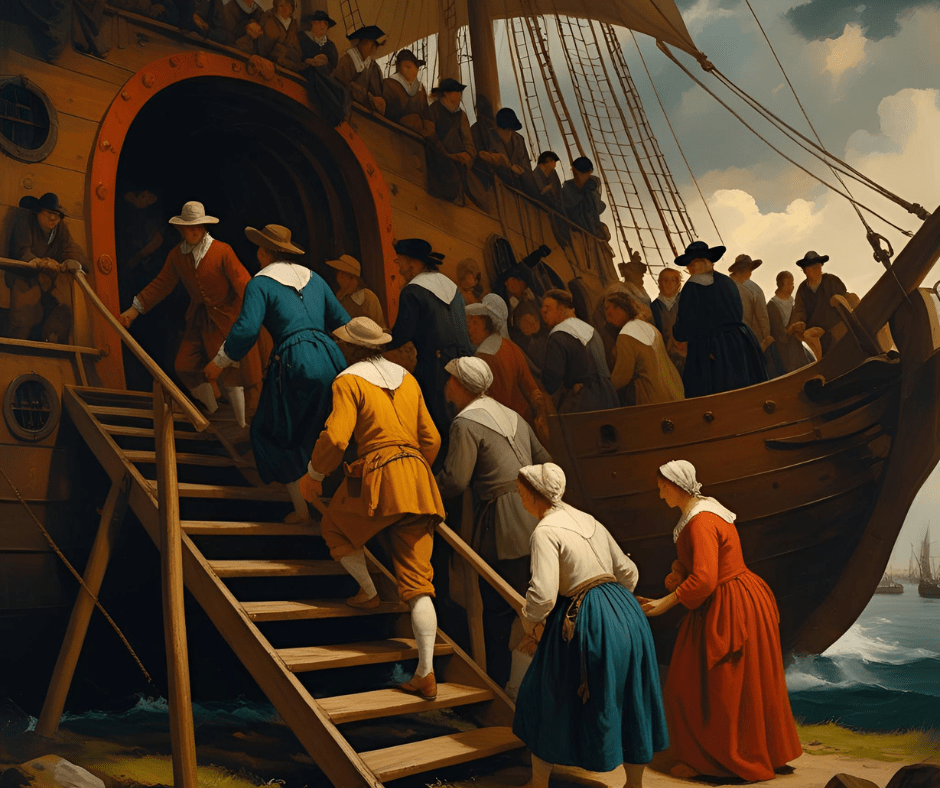
- The Winthrop Fleet (1630) – Brought hundreds of Puritans from England to Massachusetts Bay; partial lists survive through colonial records.
- The “Hotten Lists” (1874 compilation) – John Camden Hotten’s Original Lists of Persons of Quality published passenger information from 1600s English state papers and port records.
- Virginia Records – Early 1600s ships to Jamestown and later colonies sometimes listed indentured servants and adventurers bound for the New World.
- Barbados and Caribbean Registers – As sugar colonies grew, ship records documented servants, enslaved Africans, and free settlers.
Challenges in Using 17th-Century Manifests
- Incomplete Records – Many lists were lost, destroyed, or never created.
- Variable Detail – Some manifests contain full names and ages, others simply note “40 souls aboard.”
- Name Variations – Spelling was fluid, and clerks often wrote names phonetically.
- Access – Surviving manifests are often embedded in government archives, not standalone documents.
Research Tips for
- Consult published collections – Hotten’s Lists and later works by Peter Wilson Coldham are foundational for 17th-century passenger research.
- Check colony records – Some passenger lists survive indirectly in land grants, headright claims, or court cases.
- Search for indenture contracts – Many emigrants traveled under binding labor agreements that were carefully recorded.
- Use multiple spellings – Names were rarely standardized; try phonetic searches.
- Context matters – Even if a list is sparse, the ship name, date, and colony can help anchor a family narrative.
Why They Matter
17th-century ship manifests tell the story of first-generation migration. These records document the beginnings of communities in New England, Virginia, Maryland, and the Caribbean—settlements that would shape generations to come.
For genealogists, they provide a crucial link between Old World origins and New World descendants, allowing us to trace the moment an ancestor left to embark on a transatlantic journey.
Although 17th-century ship manifests may not always be complete, they remain cornerstones of early American genealogy. Every name, every scribbled age, and every recorded departure hints at courage, hardship, and the dream of a new beginning.
John Camden Hotten, The Original Lists of Persons of Quality; Emigrants; Religious Exiles; Political Rebels; Serving Men Sold for a Term of Years; Apprentices; Children Stolen; Maidens Pressed; and Others Who Went from Great Britain to the American Plantations, 1600–1700 (London: Chatto & Windus, 1874).
Peter Wilson Coldham, Complete Book of Emigrants, 1607–1660 (Baltimore: Genealogical Publishing Company, 1987).
Virginia Company Records, Records of the Virginia Company of London, 1619–1624, preserved at the Library of Virginia.
Massachusetts Historical Society, Winthrop Papers, Series 1–5, 1603–1649, Boston: Massachusetts Historical Society.
Hilary McD. Beckles, White Servitude and Black Slavery in Barbados, 1627–1715 (Knoxville: University of Tennessee Press, 1989).
FamilySearch Wiki, “United States Emigration and Immigration,” last modified 2023, https://www.familysearch.org/en/wiki/United_States_Emigration_and_Immigration.
 South Central Chapter, Association of Professional Genealogists