


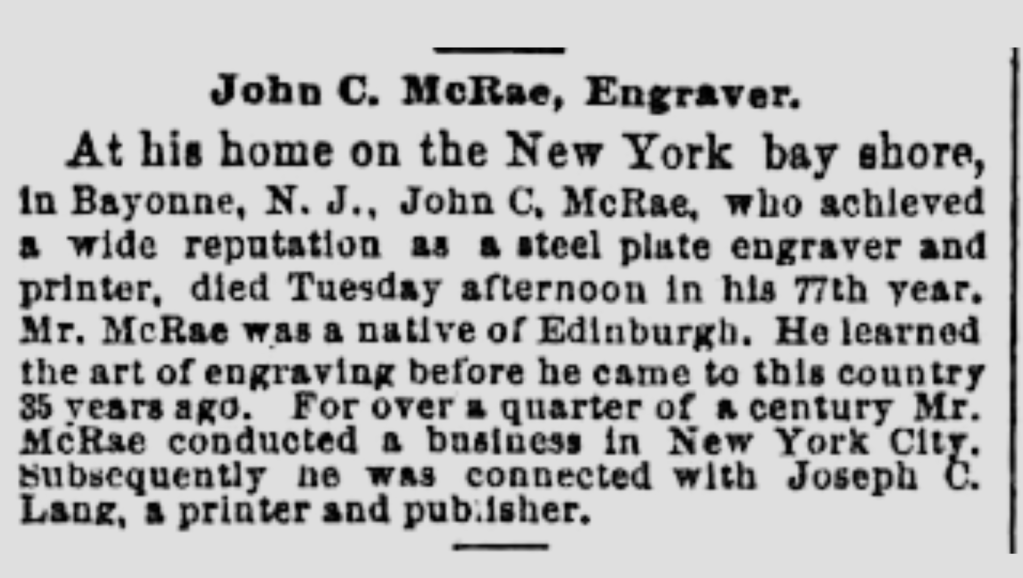
For genealogists, few sources capture the personal side of history like obituaries. By the 19th century, as newspapers flourished across Europe and North America, obituaries became a regular feature—offering not only names and dates but also glimpses into the lives, values, and communities of those who came before us.
The Rise of the Newspaper Obituary
The 19th century was the golden age of newspapers. Advances in printing technology, lower costs, and growing literacy meant local papers reached even rural communities. As journalism expanded, so did the custom of publishing death notices and obituaries.
- Early 1800s – Notices were often brief, sometimes only a line: “Died, in Boston, on the 4th inst., Mr. John Smith, aged 63.”
- Mid-century – Obituaries grew more detailed, often including cause of death, survivors, occupation, and religious affiliation.
- Late 1800s – Obituaries became narrative, offering moral reflections, stories of character, or praise for civic contributions.
What Genealogists Can Find in 19th-Century Obituaries
Obituaries from this era are genealogical treasures, often containing:
- Vital statistics – Birth and death dates, places, and sometimes exact times.
- Family connections – Names of spouses, children, siblings, and parents.
- Community standing – Occupation, military service, or civic roles.
- Migration clues – Mentions of where the deceased “formerly resided.”
- Religious and social values – Praise for virtues like piety, industriousness, or patriotism.
Some even included cause of death, reflecting the prevalence of epidemics, industrial accidents, and wars in the 19th century.
Between Fact and Tribute
Unlike today’s obituaries, 19th-century notices often blended reporting with moral commentary. Many were written not by family members but by editors or ministers.
- Religious language was common, with phrases like “fell asleep in Jesus” or “departed this life.”
- Moral lessons might be drawn from the person’s life—presented as examples to the living.
- Social status often influenced length and detail. Prominent citizens received long tributes, while working-class notices were briefer, unless sponsored by community groups.
Where to Find Them
- Local newspapers – Small-town papers often devoted considerable space to obituaries, knowing their readers were closely connected.
- Digitized archives – Platforms like Chronicling America, British Newspaper Archive, and local historical societies provide searchable access.
- Special obituary compilations – Some 19th-century church or fraternal groups printed collected death notices in memorial volumes.
Challenges
- Inconsistent detail – Some notices are richly descriptive; others only mention a name and date.
- Spelling variations – Names might be misspelled or abbreviated.
- Bias – Editors sometimes embellished lives, especially for the socially prominent, or omitted less flattering details.
- Accessibility – Many newspapers survive only on fragile microfilm or scattered issues.
Why They Matter
For genealogists, 19th-century obituaries provide more than names and dates. They reveal:
- How communities remembered the dead.
- The values and language of the time.
- Clues that connect family stories to larger historical events.
In essence, obituaries are snapshots of the cultural fabric of 19th-century society.
Reading 19th-century obituaries is like sitting in the back pew of a funeral service two centuries ago—hearing not only the details of a life but also the way communities honored their dead. For family historians, these records are invaluable, offering both facts and the human stories that bring genealogy to life.
“Newspaper Obituaries in the 19th Century.” South Central Chapter, Association of Professional Genealogists. Accessed September 12, 2025. https://southcentralapg.org/2025/08/20/newspaper-obituaries-in-the-19th-century/.
Roos, Dave. “How Obituaries Went From Dry Death Notices to Tributes to Truth.” HowStuffWorks, December 3, 2019. Accessed September 12, 2025. https://people.howstuffworks.com/culture-traditions/funerals/obituary-history.htm.
“Obituaries: More Than Meets the Eye.” Genealogy.com. Accessed September 12, 2025. https://www.genealogy.com/articles/research/76_kory.html.
 South Central Chapter, Association of Professional Genealogists