

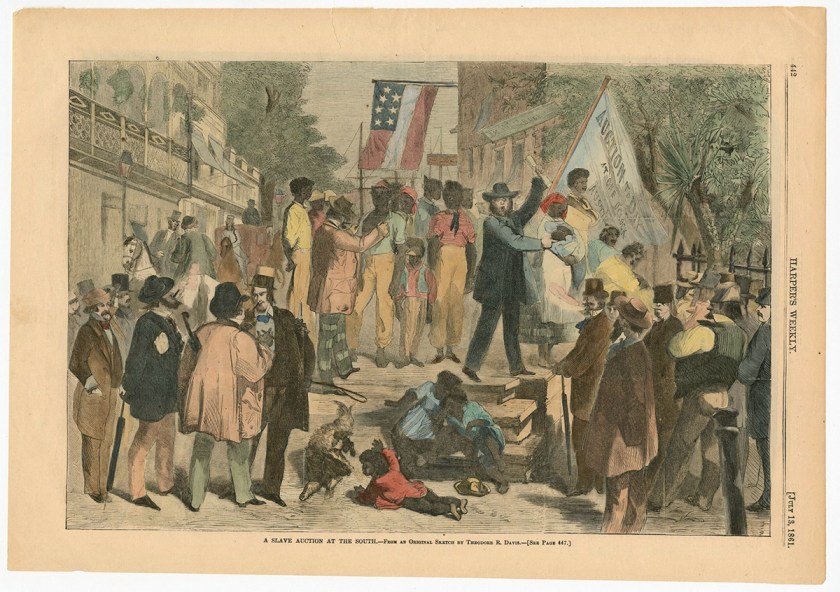
When the United States banned the importation of enslaved Africans in 1808, demand for enslaved labor did not stop—it shifted. The domestic slave trade flourished, with tens of thousands of enslaved people forced from the Upper South (Virginia, Maryland, Kentucky) to the Deep South (Louisiana, Mississippi, Alabama). Ships carried many of them along coastal routes, and with this grim commerce came a new kind of paperwork: domestic slave trade manifests.
What Are Domestic Slave Trade Manifests?
Unlike earlier transatlantic manifests that usually reduced enslaved people to numbers, U.S. federal law required more detail for coastwise voyages carrying enslaved individuals. The government used these manifests to monitor compliance with the 1808 ban on international imports.
These manifests were filed with customs officials at both departure and arrival ports. As a result, they contain far richer genealogical detail than earlier records.
Information
Domestic slave manifests often listed:
- Given names of the enslaved.
- Ages (sometimes exact, often approximate).
- Height and complexion (descriptive physical features).
- Gender.
- Owner or shipper’s name.
- Port of embarkation and destination.
- Ship name and captain.
Historical Context
The movement documented in these records reflects the forced migration of over one million enslaved people in the 19th century, sometimes called the Second Middle Passage. Families were torn apart as traders sold men, women, and children from Virginia or Maryland plantations to expanding cotton fields in the Deep South.
These manifests thus record both personal histories and the larger story of American slavery’s expansion.
Challenges for Genealogists
While invaluable, domestic slave trade manifests have limitations:
- First names only: Full names are rare, making it difficult to trace across generations.
- Inconsistent spellings and ages: Clerks often wrote phonetically or estimated ages.
- Record survival: Not all manifests were preserved; gaps remain in many ports.
- Context needed: Without pairing with bills of sale, wills, or plantation records, it can be hard to identify family relationships.
Where to Find These Records
Researchers can locate manifests in several places:
- U.S. National Archives (Record Group 36) – Holds many original manifests for ports such as New Orleans, Savannah, and Charleston.
- Digitized databases – Subscription services like Ancestry.com and Fold3 include collections of slave ship manifests.
- State archives – Some states have preserved port records and court filings related to coastwise trade.
- Local historical societies – Regional archives may have manifests tied to specific ships or traders.
Why They Matter
Domestic slave trade manifests are windows into individual lives. These manifests help descendants place ancestors in specific locations, provide approximate ages, and sometimes allow connections to be drawn between plantation records, estate files, and census data.
 South Central Chapter, Association of Professional Genealogists