

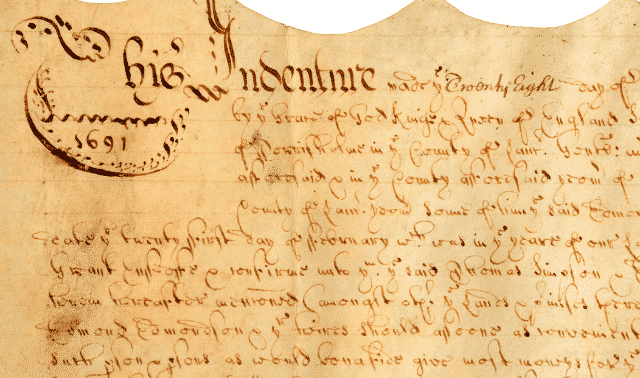
By the 19th century, indentured servitude looked very different from its 17th- and 18th-century colonial roots. In North America, the system had largely faded, replaced by free wage labor and the entrenched institution of slavery until its abolition. Yet across the world, indentured servitude was reborn as a vast, global system—reshaping migration patterns and leaving genealogical traces from the Caribbean to the Pacific.
Decline in the United States
In the United States, indentured servitude had nearly disappeared by the early 1800s. Several factors explain this decline:
- The Revolution’s ideals of liberty undermined the practice of long-term service contracts .
- Wage labor became the dominant system in northern cities and expanding western territories .
- Immigration booms meant many new arrivals paid their own passage, reducing reliance on indentures .
By mid-century, indentured servitude in its earlier form was rare in America, though contracts for apprenticeships and temporary labor still existed.
The Rise of “New Indentures”
While the U.S. saw decline, the 19th century witnessed the global expansion of indentured labor, particularly after the abolition of the transatlantic slave trade (1807) and slavery itself in the British Empire (1833). To replace enslaved labor, colonial powers turned to a “new system of indenture.”
- Indian indentured workers became the largest group, transported to colonies such as Trinidad, Guyana, Mauritius, Fiji, and South Africa .
- Chinese “coolie” laborers were sent under contracts to the Caribbean, Peru, and California .
- Irish and European migrants still occasionally entered indentures, though far less frequently than in previous centuries .
This created a truly global system of contract labor, sometimes voluntary, often coercive.
Conditions and Controversies
Although indentured servants in the 19th century were not enslaved, conditions were often brutal:
- Contracts usually lasted five to ten years, with renewal clauses that trapped many workers .
- Long voyages, poor food, disease, and harsh discipline made mortality rates high .
- “Freedom dues” were often minimal, leaving workers stranded in unfamiliar lands .
- Many systems blurred the line between indenture and slavery, sparking heated debates in Europe and the colonies. The British “coolie trade” in particular came under scrutiny, with critics describing it as “a new form of slavery” .
Genealogical Significance
For genealogists, 19th-century indentures created new family lines across continents:
- Indian indentured labor established lasting South Asian diasporas in the Caribbean, Africa, and the Pacific .
- Chinese indenture seeded communities in Latin America, the Caribbean, and the western U.S. .
- Record sets include ship registers, plantation contracts, colonial office correspondence, and newspaper accounts, which are invaluable for tracing ancestors caught in this global movement .
The End of the System
By the late 19th century, opposition to indenture grew stronger. Humanitarian campaigns, combined with resistance from laborers themselves, pressured colonial governments to phase out the system. Britain officially ended indentured labor recruitment from India in 1917, marking the close of this global labor practice .
Indentured servitude in the 19th century was not just a continuation of the past but a reinvention of the system on a worldwide scale. While America largely moved on, millions of people from India, China, and other parts of the world were bound into service abroad, leaving legacies that shaped the cultural landscapes of dozens of countries. For family historians, these records tell stories of resilience, survival, and the making of global diasporas.
Sources
- Northrup, David. Indentured Labor in the Age of Imperialism, 1834–1922. Cambridge University Press, 1995.
- Morgan, Edmund S. American Slavery, American Freedom: The Ordeal of Colonial Virginia. W.W. Norton, 1975.
- Bailyn, Bernard. Voyagers to the West: A Passage in the Peopling of America on the Eve of the Revolution. Vintage, 1988.
- Tinker, Hugh. A New System of Slavery: The Export of Indian Labour Overseas, 1830–1920. Oxford University Press, 1974.
- Look Lai, Walton. Indentured Labor, Caribbean Sugar: Chinese and Indian Migrants to the British West Indies, 1838–1918. Johns Hopkins University Press, 1993.
- Carter, Marina. Voices from Indenture: Experiences of Indian Migrants in the British Empire. Leicester University Press, 1996.
 South Central Chapter, Association of Professional Genealogists