

Want to write about a topic?
Email submissions to: apgsouthcentralchapter@gmail.com
-
Networking Tips and Tricks
On February 17th 2026, we welcomed Katy Lindsay, Austin TX entrepreneur to offer hints on becoming a great networker.
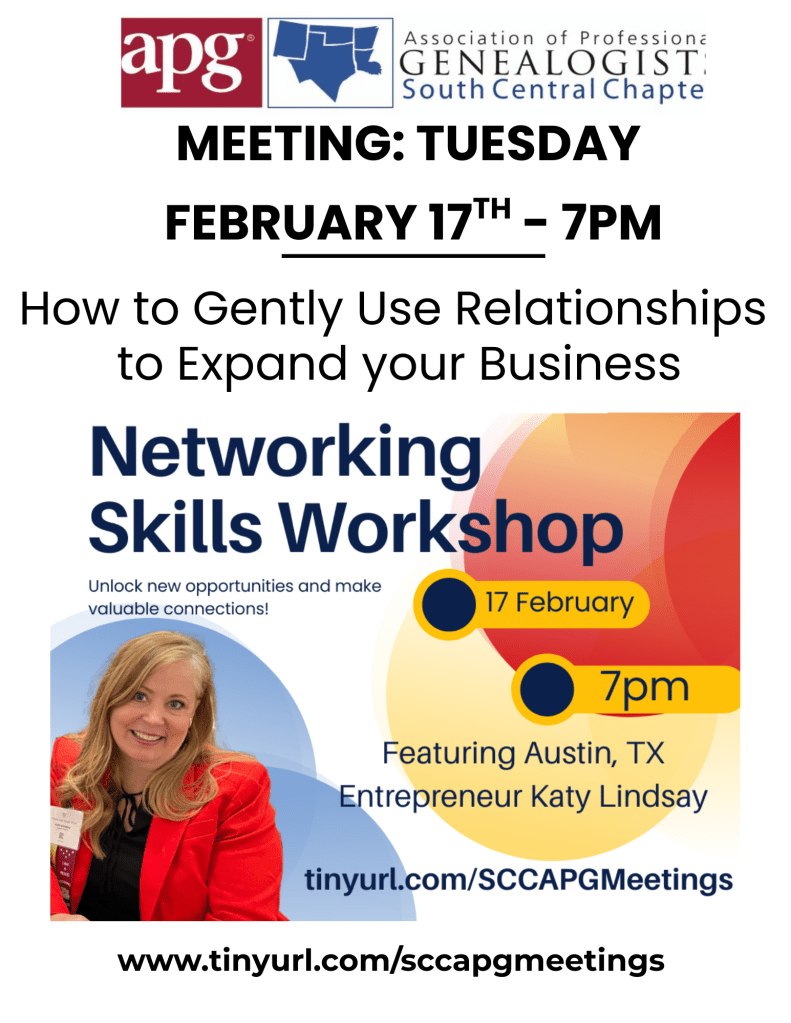
Here are her top 5 tips –
Get out and do things – Join a church, club or organization whether it be volunteer or professional. GO OUTSIDE and meet people.
Be genuinely interested in their lives – People are impressed when you remember their name/occupation. Ask questions about their family, work, and hobbies.
Don’t be afraid to ask for favors – Now that you’ve met a person, put them in a ‘rolodex’ for future contact. Have a business card handy and ask for theirs.
LISTEN – People want to be heard, and you want to know about THEM you don’t want to tell them about YOURSELF
17th Century 18th Century. Accreditation ai ancestry artificial-intelligence Certification chatgpt citation citations Continuing Education dna Education family family-history genealogy genetic genealogy GRIVA handwriting history igg Indentured indentured-servitude Lineage Societies manifest manuscripts news newspapers obituary research Research Institutes Salvery SAR ship manifest slavery societies technology Texas
-
-
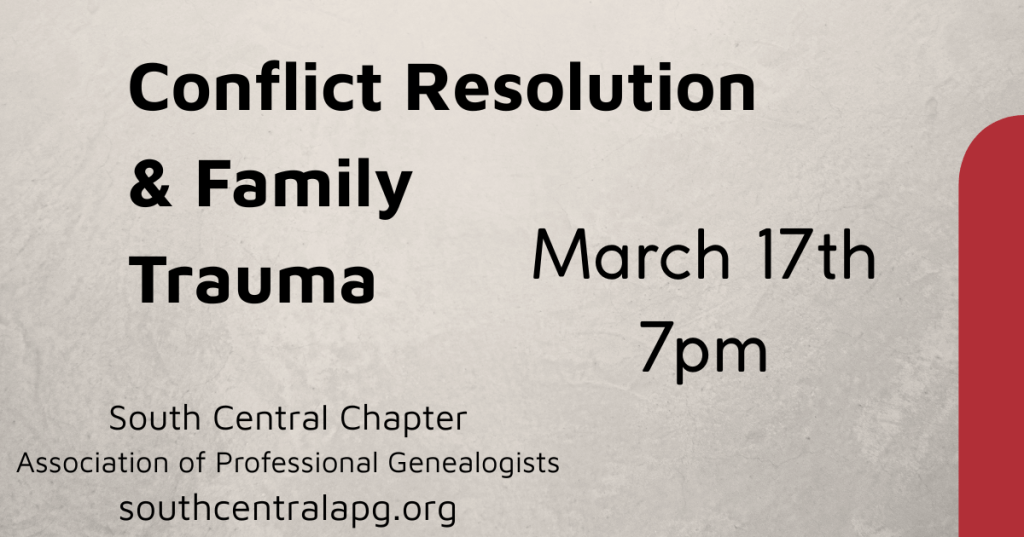
Conflict Resolution & Family Trauma
Continue reading
-

Networking Tips and Tricks
On February 17th 2026, we welcomed Katy Lindsay, Austin TX entrepreneur to offer hints on becoming a great networker. Here are her top 5 tips – Get out and do things – Join a…
-
Meeting Tuesday – February 17th at 7pm
Hello South Central Chapter Member,Please join us Tuesday February 17th at 7pm for the presentation: Networking – How to Use Relationships to Expand Your Businesswww.tinyurl.com/sccapgmeetings We hope you enjoy your year of free membership which…
-
-
-
-
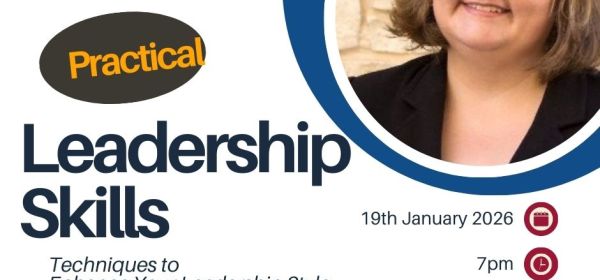
Leadership for Nonprofits > January 19th 7pm
South Central Chapter of the Association of Professional Genealogists (South Central Chapter Association of Professional Genealogists) extends an invitation to their 7pm January 19th meeting featuring DAR Magazine Editor Kate Johanns. Kate Johanns will…
-

Exploring Certification and Accreditation Pathways
For genealogists who wish to demonstrate advanced skill and professional standing, certification and accreditation provide structured pathways. While not required to practice genealogy, credentials from organizations such as the Board for Certification of Genealogists…


Designed with WordPress
 South Central Chapter, Association of Professional Genealogists